Wednesday, March 21, 2007

My Textures

Now once all the elements are where you want them to be we can now texture it! To do this we have to enable us to use it in Photoshop, to do this we need to render and image of it by selecting ‘Tools’ then ‘Render UVW Template’. Then save it as a TGA image with the values below.


The Textures
The Art of Unwrapping

When it came to texturing I had a few problems – I didn’t know how the unwrap UV thing worked and when it did I had a few faces on my model that had have polys – this was bad as Unreal would have a fit and not except the model. So I had to unwrap the UV change the faces and then redo the UV, this was done about 3 times and was highly annoying and took a considerable amount of my time (grrr).

Once Unwrap UVW has been selected, the Face should be selected and on the Viewport all of the object that’s needs texturing should be selected. BUT BE AWARE!!! Ignore Backfacing should be not be selected.

The object can be selected by dragging the mouse over the whole object or simply pressing Ctrl+A. Notice now that the object(s) have turned red.
Now select Edit on the tab on the right – this will bring up a new screen.

On the new screen is a map of all the objects selected but broken down by max into elements – looks a bit of a mess but selecting Flatten Mapping and entering numbers around Choose an 75 and 0.25 in the boxes will clean up the Map and also spread them out which will make then much easier to texture.

To move an individual element to a certain area the ‘Select Element’ should be selected, that way the whole Element is moved and not just a little bit.

Now once all the elements are where you want them to be we can now texture it! To do this we have to enable us to use it in Photoshop.
My initial idea was to make some sort of weapon that can be used in Unreal – but everyone else was talking about it so I thought id create something at random, so the first thing that popped into my head was a totem pole. RANDOMNESS!!!

Im starting the model from a spline then lathing it to the shape that I want, once this has done I will detail it by changing it to an editable poly moving around vertex points.
I placed a picture of the totem pole behind my model so I can use it as a template as I worked on it.

Saturday, February 10, 2007

For my D & AD i decided to do the horror festival brief, for this i wasn't totally sure if we had to 'make up' a festival for our nearest city or in fact find an existing horror festival somewhere, as the brief was not specific. So i made it up :) and here they are....

Friday, January 26, 2007

My ten images for image and VR have been completed, below are all of them with a quick little description o them. It was quite enjoyable doing this project i feel that i have learned alot more in Photoshop and went a bit into illustrator, all good!


Image Six - The Wasteland
I wanted to create a dry 'Infertile' land as described in the poem. I used the city in the distance emphasising the past.


Image Seven - Vermin
The kid in the middle is 'civilisation' and the guns are to emphasize people who are greedy (vermin) take without any cause of their actions and repercussions.


Image Eight - Girl With Music
The girl who is a prostitute remembers her past through the sound of a record player (music lines) and the children swinging away in the left of the picture brought this together. Quite like this one!


Image Nine - Hope
The rain symbolizes hope, following the poem.


Image Ten - Cemetery
It's too late.


Image One - Colonnade
A women's past is that of seeing her man (who's in a war)for the first time, i brought this together with the use of the first stanza - the flower bulbs, and lilac colours.


Image Two - Destroyed City
A simple scene of what war brings.


Image Three- Psychic
A women goes to see a psychic about her man at war, the cards are death. I quite liked this image as i used a fair few techniques to achieve the final outcome.


Image Four - Face in the crowd
This shows the view of one person in a crowd and the rest blurred out, showing loneliness even in a crowded place.


Image Five - Rich Girl
This is my favourite image, i used Photoshop and Illustrator for this one and i quite liked how the girl came out. This is a rich girl who doesn't have her man with her. She is trapped in her home and emotionally so i wanted her to look this way on the bed.
!!!!JUKE IS COMPLETE!!!!

Well it was complete a long time ago but i cant be bothered to use this blog thing that often - but here it is...


After playing it absolutely loads of time i still enjoy it and hopefully everyone does too. With the main goal of getting the most points - round by round a player can see themselves come from last place to fisrt with some intelligent play and a bit of that luck that all games need!!

NICE ONE.

Tuesday, January 09, 2007

Surround sound shifts the balance of audio playback from one dimension (left/right) to two or three dimensions (left/right front/back and center). This gives a more realistic audio environment actively used at cinemas. There are different formats of 5.1 but the most common is Dolby 5.1 surround. The .1 is the channel sent to a subwoofer.

There are two different types of surround sound; digital & analogue.

Analogue surround sound creates audio from rear channels by artificially extracting the common sounds between the left and right channels and the centre channel finds the differences between them all to give its own output.
Digital surround sound gives more directions from which you can send sound to the listener; each direction requires a separate channel. The common multichannel configurations available in consumer products today are 5.1, 6.1, and 7.1 systems.

There are a few ways to set up surround sound, the simplest uses several speakers around a listener to play audio simultaneously. Another method is to set up the speakers where the wave fronts come together in a central point “sweet spot” in the room and the wave front is subtracted as you move away from the point.
Another way uses WFS (Wave Field Synthesis) which distributes sound waves evenly over a whole area so there is no particular ‘sweet spot’ this used particularly within arenas and music clubs. This is at a far greater cost of using multiple loudspeakers and a computer system that can control them.
For sound engineering purposes lets say an engineer wants to create a 5.1 Mix and distribute it on an audio CD the software will need to split the tracks into 6 output destinations that have been processed by the engineer. Left rear, right rear for example. So you could have the song playing in all the speakers and say have added sound effects in the rear speakers. Much like movies where a car coming from the right of the screen will come from the right speakers and move to the left as the car travels off screen.

A sound card that has either 6 channel analogue out connected to the speakers OR a digital-out soundcard (S/PDIF) these digital soundcards are indicated by their logo below.

A lot of computers nowadays have these types of soundcards for the commercial use of home theatre systems. They are easily obtainable and more and more people go for this advanced way of hearing sound.
Setting it up is quite easy too now on Windows XP, simply by going into the advanced sound properties and selecting 5.1 or whatever. On some P.C’s there is small program where the speakers can be altered so that some may be louder than the other (good for awkward shaped rooms). After this they are all set up and ready for use!
For the portfolio of images project I need to construct a minimum of ten images which must be printed and compiled in the form of a ‘book’. The images must portray my personal point of view on the subject/theme of the chosen text. The text I have chosen to work on is The Wasteland by T.S Elliot.

Before I can start creating my ten images for The Wasteland I need to read through it and create some notes about each part of the poem – these notes will influence the final outcome of my images.

Part 0ne – Burial of the Dead

Is describing April as a cruel month, neither living or dead. The speaker (Marie) is re-telling the first meeting she had with her lover. The first stanza shows romantic memories at first and then horrifying imagery which continues in the rest of the poem.

Told from the soldier’s point of view – maybe Marie’s lover? He is passing through a destroyed city, buildings and churches. It shows he’s lonely and his shadow follows him around but is obscured by man made objects. ‘I will show you fear in a handful of dust’. The land is barron and debris is scattered after the war, he remembers being in the garden (Colonnade). He couldn’t show his feelings until he has thought about it now – when he has time.

Somewhere else a woman has gone to seek out what has happened to her lover in the war. The card is a drowned sailor where the eyes we’re pearls signifying that many have died a while ago. A lot of women have come to see about their loved ones.

Describing London through the eyes of a soldiers wife, exhausted and confused she follows the crowd into the city. She passes a church and heard the death toll.

Part two – A Game of Chess

The author references to Cleopatra and her first encounter with Anthony. The woman in the stanza is in a wealthy environment but is lonely and frustrated. She places a contrast of her emotional world of darkness, boredom and isolation. She was raped by her sisters husband ‘Barbaric King’ and is being persuaded by him, she is incapable of escaping, trapped in her mind and body.

Here are two parties expressing their inability to portray their feelings. ‘I never know what you are thinking’ She cant deal with the silence of her partner. The war is haunting this participant.
She is bored of being in the house with nothing to do (like the rich woman) She may be disloyal to her partner due to his lack of presence. He however is so far away and absent minded that he uses an illusion of playing chess – play the field – move on.

The two women are in discussion at a bar and one is on about getting her teeth fixed for her man so she is nice for her husband when he gets back. She is on pills preventing her from having anymore children but looks old due to them. The ironic message in the scene is that she is fertile but her body looks old and withering away – like a wasteland.

Part Three – The Fire Sermon

The land is dead with bare trees and empty spaces. The cities are empty with no human activity, they left against their will. The ‘rattle of bones’ personifies death and shows its recent triumph in the city. The stanza creates a mood of loss and sadness. The only thing in the city is the rats scuttling around near the dead corpses, the scene of flowing rivers now disrupted with bodies, pollution and fallen buildings.

An arrogant man walks in and demands service from the girl after he’s finished he just leaves. She smoothes her hair after the encounter – meaning she’s so used to it that its part of her life. Music is playing in the background which gives her the memories of the past. (scenes of happier days). The memories of bright colours everywhere, peoples conversations distant memories as they go into flames.

Part Five - What the Thunder Said

A vivid picture of a wasteland where once mountains where, mountains is personified symbolising ‘Nature’. Nature has the power to redeem itself (the seasons). Hope is invisible and is symbolised by rain. Cities were once built, destroyed. Built once more and destroyed again.

The above notes will help me as a ‘guide’ to the images I shall create. My initial thinking is to create the various images but with no text to neighbour them. Allowing the audience to ‘fill in’ the gaps with their imagination, mainly as we all think differently!!

Thursday, December 28, 2006

Iv'e created a new column for my blog work and shall name it All things bright and Multimedia

I'll create posts now and again about various Multimeda related topics that i shall research and share with you. SO i get to know more about aspects of Multimedia and share it with you.

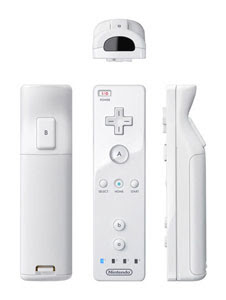
So without further adu i shall post my first Blog and it's about the NEW Nintendo Wii (Mainly the remote).

Unless you have been on mars for a while you will have heard of the new game console ‘Nintendo Wii’. Previously known as Revolution and the successor to the Nintendo GameCube. Mentioned in 2004 and a prototype was shown in 2005 at the Tokyo Game Show. The feature which makes this console so sort after is it’s wireless controller.

The contoller works by using two things; Infa Red and an accelerometer.
Infa Red - communicates with the consoles sensor bar and that detects where the remote is pointing to.
An accelerometer - An instrument for measuring acceleration, detecting and measuring vibrations, or for measuring acceleration due to gravity. The Wii remote for the contains accelerometers for measuring movement and tilt to complement its pointer functionality. However when playing a game the gamer must not be too far or too close or the signal will be lost.


With this a gamer can not only just be apart of a game with various flashing in-depth graphics or use a steering wheel or gun to get closer to the action but now actually move about and feel more of the character in the game. Top Notch!


Friday, December 15, 2006

Recording a band
Below is a step by step guide of how to record a band in the bonnington studio. Assuming that the instrument(s) and or singer have been miced up we can begin...
  • Open a session in Pro Tools and save it in the required location.
  • Create track - as many as microphones are input in the rooms.
  • Create a stereo track, this will be our master fader.
  • Set all tracks on the mixer to 'MIC' input and set the gains to zero.
  • Record and enable the tracks.
  • Find levels of the mics and adjust the gain accordingly until the sound coming in turns into a light orange, this way we have a little bit of room for a louder sound coming through without it clipping and distorting.
  • To set up the headphonnes for a headphone mix we need to look at the light grey area on the mix window and click on the arrows go to 'INTERFACE' - then headphone send left. Make sure to set them to 'PRE' and then put the faders to zero. (Alt-click the fader)
  • On the Octopri the inputs need to be selected to mono, these will light up orange when pressed.
  • Press 'SEND B' then 'FLIP' on the mixing desk to shift the desk function to the headphone setup - the faders can be adjusted accoringly here.
  • To adjust the output level on the headphones in the stuio then simply change the output level on the octopri.
  • The people in the studio room can chack out the headphone levels by putting the headphone jack in the 'HEADPHONE OUT' on the octopri .
  • If the vocals is going to be recorded over the song, they will want to hear the song when they will be recorded. To do this the vocal track on the record window on Pro Tools will need to be set to 'INPUT ONLY MONITORING' this is the 'I' near the track name.
  • For the use of a keyboard in the Live Room two DI boxes can be used (left and right channels) to set up this for Pro Tools we will need to Aux Tracks.
  • If Phantom power is ever needed through the Octopri the clicking the +48v will give the microphone the power.
  • When wanting to talk back to the band at any time in the Live Room the 'TALK BACK MIC LEVEL' knob and the 'MONITOR TO AUX' knob should be turned up accordingly.

Good things to know...

  • TDM plug-ins use the computers hardware and R-TAS use external hardware(e.g. an M-Box) this is useful to know if the computer is starting to run slowly.
  • A guitar can also be recorded in the Studio Room if the jack is inserted in the Octopri and the 'INSTRUMENT' button is enabled. The input on ProTools should be set up for this also e.g. B1
  • 414's are good for multiple vocal inputs at the smae time - once set to omni.

Tuesday, November 28, 2006

Whilst doing various shots for SPP2 i was playing around with the camera and took a couple of shots, they may not be great quality and you may think they are pants, BUT i dont care because i dont know how to operate the uni cameras and i put them on my blog anyway so hahahaha!


SPP2 week 2, following on from the the space lecture last we worked on Visual Blocks this time round. These are Line, Shape, Tone, Colour, Movement, Rhythm. Below are a few examples of what our group took.

We recorded a shot where the 2 objects, although different in type, purpose have a similar shape.
Closure of line, looking at the birds your mind can pick up a triangular shape.

We also recorded a shot that demonstrates continuum of movement from shot to shot in terms of the viewer’s attention. Here the duck is on the left and when it leaves the screen on the right another duck will appear on the left.
This blog is for SPP2 - Space

There are four types of space Deep, Flat, Limited and Ambiguous. 'Space' is used in camera work (both stills and moving pictures) and below are a few pictures that our group took using various tyes of space.


Ambiguous space - The viewer is not sure of the actual size of an object(s) and shape.


Deep Space - Uses aerial diffusion where the atmosphere is darker or not as clear to sive the scene depth.


Flat Space - Uses objects moving parallel to a surface similarities in textures and surfaces.


Limited space & flat space - A combination of Deep and Flat space with still a sense of tone and image sizes.


FEEDBACK!!!

After slightly ammending the rules i played the game with a few other people (in two player and four player scenarios) and here are the two feedbacks i received...

Michelle - "I think your 'JUKE' game is quite original and the design is simple and nice. Good!"

Todd - "The game is good and original. I like the idea of layers within the game e.g. trying to find the cards that spell Juke, the numbers and the uses of the coloured bonuses. Well Done.

So the game works the rules have been amended and the next stage is to make the game look pretty. So the next blog will show the cards that i have made up on Photoshop... SORTED!

Ok last week Brad asked us to do a quick guide of how to play the game - I think he said the first round of gameplay but i cant remember so i shall continue until i can not think of anymore :)

As stated in the rules earlier the game consists of four rounds - for a two player game each player starts round twice, for four players each player starts a round once and for a three player game each player starts a round once, but on the last round, the player who is currently losing starts.

  • Firstly as any card game starts off with a good shuffle is needed!
  • Right, to start off the game the dealer should give each player 5 cards (face down) each, whilst the rest of the cards are placed face down in a pile - this will be the pickup pile for each round.
  • The cards are picked up by the respective player but must not be seen by any other players. The player right of the dealer goes first, and discards a card they do not wish to keep. This should be placed face down to create a new pile next to the pickup pile. This is known as the drop pile.
  • Once a card been discarded then the player picks up a card from the pickup pile so they have five cards in their hand once again. The next player (anticlockwise) then does the same and the play continues.
  • The players continue to dicard and pickup cards trying to reach their goal of getting J,U,K,E and/or search for symbols of the same colour for a larger point score. Special Play Cards (SPL's) can be used at any time by any player except for the JOKE card which can only be used once 'Juke' has been called.
  • The play continues until a player shouts out 'JUKE' and the round has come to end (barring that a special play card does not stop the JUKE).
  • Once a round has been completed each player counts the score of their cards to give a round total. This should be written down.

Bonuses for a round can include...

Double score: A players score is doubled if they called 'JUKE' and /or if they have 4 coloured symbol cards in a hand.

Triple Score : A players score is tripled if they have all five of their cards the same coloured symbol.

After four rounds each of the players round totals is added up to give a game total, the player who has the largest score wins!!!!!!!


Monday, November 27, 2006

Right the game was created on pieces of paper as a first copy. From here the initial testing stage can commence. After playing a few games of 'Juke' some amendments to the rules and alteration to the gameplay were discussed. Here are the changes and why...

After winning 'Juke' in one round a player with a low score can easily be out of the rest of the game with the other player calling Juke (with the bonus of the triple points score) so a winning Juke score will be doubled from now on.
With this a player who loses a couple of rounds can still be in the game without being too far behind, keeping the game close.

Symbols, letters and numbers could be placed on the border of the card?
When holding the cards players may be aware of showing cards when holding them - when the symbols were in the middle. If placed on the border the cards can be held more closely.

Possibly use the symbols more E.G four of a kind may be double the final score and five of a kind could be triple score for that round.
Players can chose not to go for duke and try and attain symbols for a higher score. The game will be higher scores (which to the player will feel more of an accomplishment).

Reducing the amount of cards - especially the lowest and highest numbers. Maybe six low and four high.
More numbers ranging between 3 and 6 will surface which will then attend a more close game. As before alot of 1's came into hand which was slightly annoying.!.

Monday, November 06, 2006

After finding my friend Atif, I politely (forced) asked him to read my rules on the previous blog to see if they were clear enough to understand. He gave me the thumbs up but asked about the special cards. I told him that I have not thought of them all yet but they will change the balance of a game quickly, so a player who thinks he is on the verge of winning with a massive pointscore can be juked and lose everything!

He was excited.
Okso a quick run-through the rules i have created so far - these are not finalised and may be amended and added on throughout production and testing.
The cards will each have a number (which represents a point) not only this but the card also has a symbol (yet to be decided which symbols) and a letter J,U,K and E.

THE OBJECTIVE of the game is to gain AS MANY points as possible.
A pen and paper should be used to keep score.

Firstly the cards are shuffled, and 5 are given to each player and the rest are placed face down in a pile.

The means of winning a game is to collect at least 4 cards that spell out JUKE by replacing unwanted cards with the pile on the table. The player must first dicard an unwated card face down near the pile and then pick the top card from the pile. The cards must not be seen by the other player(s).
Note that a player will always have 5 cards at the end of their go so a duplicate lettered card may arise, this card will then be used for the value of the points or symbol it has with the exception of the special cards (which will be explained on the next blog).

Once a player has JUKE they may call juke to end the game and the points on the cards are added by each player to give a total. The player who won by calling JUKE gets a bonus and triples their score for the game. JUKE does not have to be called straight away, instead a player can continue replacing their cards to try and get as many points as possible. HOWEVER if another player gets and calls JUKE then they shall receive the bonus.

The game is played four times for J,U,K E and each player goes at least once. And the point score from all the games are added together to create a total score.


So overall the game is to be greedy and get as many points as possible but also not to be too greedy and lose bonuses! A player is to try and juke the opposition to become victorious!

Sunday, November 05, 2006

Ok after careful consideration i have decided that Juke will not be created from a standard set of playing cards but indeed a shall create a new deck specifically for this game.

Also looking on Dictionary.com i found out that the word 'Juke' means -
1.
to make a move intended to deceive (an opponent). –noun
2.
a fake or feint, usually intended to deceive a defensive player.

After a quick think through the rules, the game kind of follows this description. EXCELLENT so the game is in progress, in the next blog i shall go through the rules i will have created to date.
Ok, so to kick start off with the Games Design we have to create a card game that follws a few simple rules...

1) The game must be original and use no further components E.g dice, boards tokens.
2) Be for a minimum of 2 players and last longer than 5 minutes (no more than 20)
3) Must have a typed rule sheet.

So with this i thought of random thoughts and stared out of a window or two to come up with 2 games... Diamond Cut and Juke

After consideration of rules and a means to win the games Juke was the one that i will concentrate on - as the other was pants!